Teaching Strategies and Smart Learning Outcomes
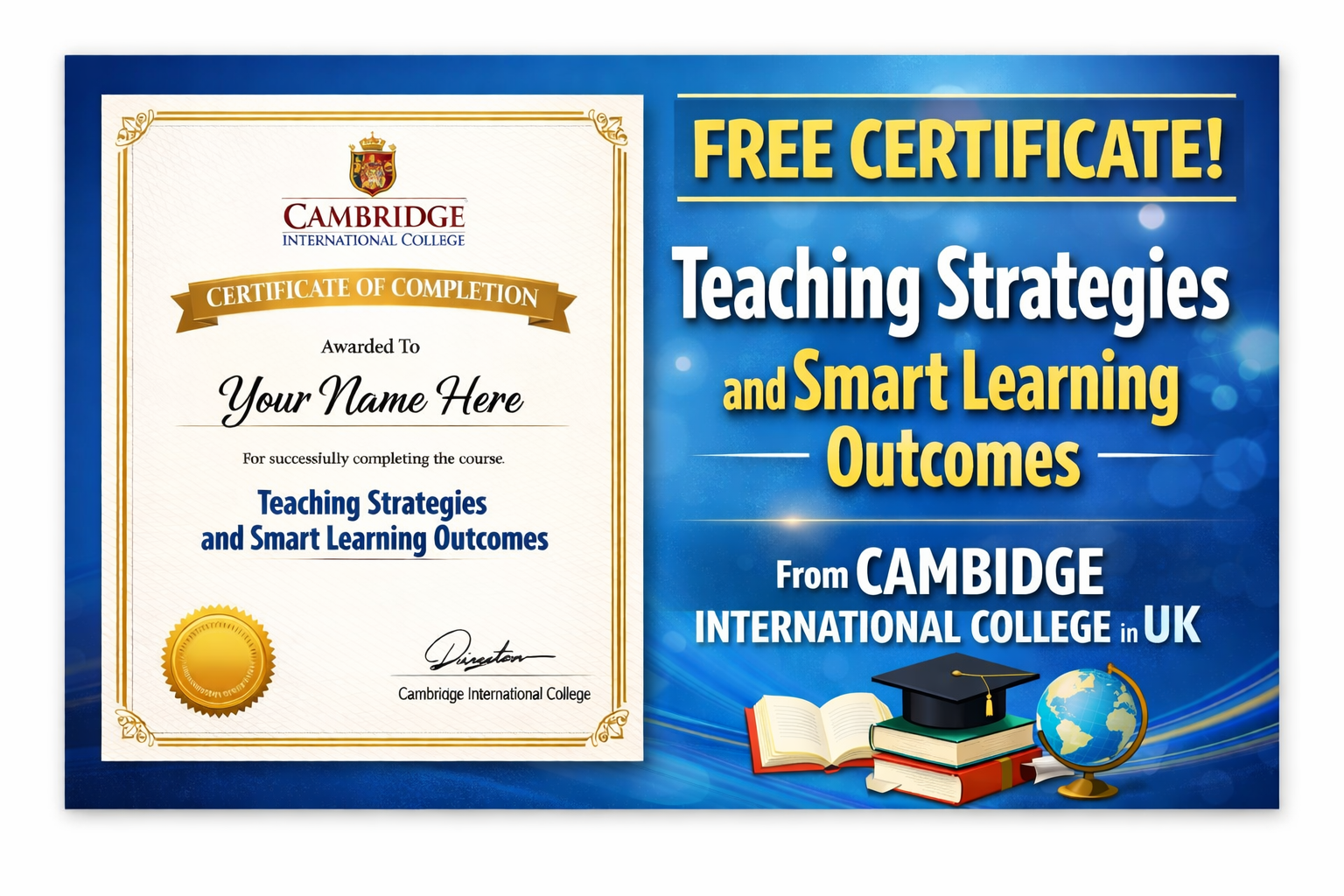
Course Title: Teaching Strategies and Smart Learning Outcomes Issued By: Cambridge International College Course Type: Free Online Course Certificate: Automatic issuance (within 24 hours) Target Audience: Teachers and education professionals This course is designed to enhance teachers’ knowledge of effective teaching strategies and smart learning outcomes. Participants will explore modern pedagogical methods, active learning approaches, and practical classroom strategies that promote student engagement and measurable learning results.
Browse sections — less scrolling.
Full program overview
Lecture Structure – 5 PartsPart 1: Introduction to Modern Teaching StrategiesDescription:Overview of traditional vs modern teaching approachesUnderstanding the importance of active and student-centered learningKey strate...
Lecture Structure – 5 Parts
Part 1: Introduction to Modern Teaching Strategies
Description:
- Overview of traditional vs modern teaching approaches
- Understanding the importance of active and student-centered learning
- Key strategies: collaborative learning, flipped classroom, blended learning
Explanation:
This section introduces participants to how teaching has evolved. Traditional lecture-based teaching is often teacher-centered, but research shows that student-centered approaches significantly improve engagement and retention. Teachers will learn why integrating interactive methods, such as group discussions and project-based tasks, leads to better learning outcomes.
Part 2: Setting Smart Learning Outcomes (SLOs)
Description:
- Understanding SMART objectives (Specific, Measurable, Achievable, Relevant, Time-bound)
- Linking learning outcomes to curriculum goals
- Evaluating outcomes for continuous improvement
Explanation:
Teachers will learn how to write effective learning outcomes that are measurable and aligned with the overall curriculum. For example, instead of saying “Students will understand math concepts”, a SMART outcome would be “By the end of this lesson, students will correctly solve 5 addition and subtraction problems within 15 minutes.” Clear outcomes help teachers assess whether students are achieving intended goals.
Part 3: Active Learning Strategies in the Classroom
Description:
- Interactive lectures, discussions, and group activities
- Use of technology to enhance engagement
- Encouraging critical thinking and problem-solving
Explanation:
Active learning shifts the role of the teacher from a “giver of knowledge” to a facilitator of learning. Participants will explore methods such as think-pair-share, debates, quizzes, and educational games, which encourage students to think critically and collaborate. Technology, like Kahoot or interactive slides, can make lessons more engaging and measurable.
Part 4: Smart Assessment Techniques
Description:
- Formative vs summative assessment
- Designing assessments aligned with learning outcomes
- Giving effective feedback
Explanation:
Assessment is not just grading; it’s a tool to enhance learning. Teachers will learn to design quick formative assessments that track student progress, like exit tickets or mini-quizzes. Feedback should be actionable, timely, and personalized. Smart assessment ensures that students meet learning objectives, and teachers can adjust strategies when outcomes aren’t achieved.
Part 5: Reflective Teaching and Continuous Improvement
Description:
- Reflecting on lesson effectiveness
- Adjusting teaching strategies based on outcomes
- Lifelong learning for teachers
Explanation:
The final part emphasizes the importance of self-reflection and continuous improvement. Teachers learn to analyze which strategies worked, what students struggled with, and how to adapt future lessons. Incorporating feedback from students and peers ensures teaching remains dynamic and effective.
Practical, easy-to-follow techniques you can apply in classrooms to enhance participation and outcomes.
Additional Supportive Links
General Teaching Strategies & Active Learning
Teaching Methods for Active Learning – practical ideas for engaging students with classroom strategies:
https://www.youtube.com/watch?v=wz9JLHODQ74
What Is Active Learning? Teaching Techniques to Engage Students – explains how active learning works in practice:
https://www.youtube.com/watch?v=y3VqTUbuLPw
Active Teaching and Learning Strategies (Workshop) – workshop-style session with examples of strategies:
https://www.youtube.com/watch?v=aw_ipfbPpL0
Arabic & Classroom-focused Resources
استراتيجية التعلم النشط – What Active Learning Is (Arabic explanation + classroom ideas):
https://www.youtube.com/watch?v=OgZs95Wmji0
استراتيجيات التعلم النشط وأفضل طرق التدريس الحديثة – practical strategies for teachers:
https://www.youtube.com/watch?v=Qxtb-2sjVaE
More Advanced / Detailed Resources
Active Learning Practices and Strategies – another explanation of active involvement techniques for students:
https://www.youtube.com/watch?v=jcfZa6-gluQ
Playlist Collections (Multiple Videos)
Active Learning Strategies Playlist – a collection of various videos to support deeper learning:
https://www.youtube.com/playlist?list=PLChm2hdP1WB01HQlBw9O2wLVXHKjvZVfa
استراتيجيات التعلم النشط (Arabic playlist) – videos on different active learning strategies:
https://www.youtube.com/playlist?list=PLEGqEH4n3RhkG6sSbebfRtQrDg1pi6u_c
Passing: Complete all questions; certificate will be available in 24 hours.
To upload your certificate you have to login by your email and password to the website www.cambridge-college.uk then go to your Dashboard look at Certificate click , view and download
Enroll on this course
Payment method
Full course fee charged once at checkout.
Secure card checkout
Course outline
Open a module to see its lessons. The full reading opens after enrollment.
To provide an overview of effective teaching strategies that enhance student engagement.
- Understanding Different Learning Styles
- Active Learning Techniques
- Introduction to Bloom's Taxonomy
To equip educators with the skills to create measurable and achievable learning outcomes.
- SMART Learning Outcomes
- Aligning Outcomes with Assessment
- Writing Effective Learning Objectives
To explore innovative teaching methods that promote critical thinking and collaboration among students.
- Project-Based Learning
- Flipped Classroom Model
- Integrating Technology in the Classroom
To analyze advanced assessment strategies that provide meaningful feedback and support student learning.
- Formative vs. Summative Assessment
- Peer and Self-Assessment Techniques
- Using Rubrics for Effective Assessment